HANGZHOU, ZHEJIANG, CHINA, October 23, 2026 /EINPresswire.com/ —
Hangzhou Witkobout Technology Co., Ltd. is part of the industrial equipment market serving businesses that rely on compressed air for manufacturing, automation, and other operational processes. As factories increasingly focus on production stability, energy management, and equipment reliability, the supporting components of compressed air systems are receiving greater attention. Air treatment and storage equipment, including Air Dryer and Air Tank products, play important roles in helping industrial users manage air quality, pressure fluctuations, and variations in demand.
Compressed air is widely used across industrial environments, from pneumatic tools and automated production lines to packaging machinery and general manufacturing equipment. However, air discharged from a compressor can contain moisture, and its pressure and delivery rate may vary according to operating conditions. Without appropriate treatment and storage, these factors can affect downstream equipment, increase maintenance requirements, and interrupt production processes.
For this reason, compressed air systems are generally designed around more than the compressor alone. Air treatment equipment helps manage moisture and other contaminants, while storage tanks provide a reserve of compressed air that can support changing demand. Hangzhou Witkobout Technology Co., Ltd. operates in this broader industrial equipment context, with Air Dryer and Air Tank among the product categories relevant to compressed air applications.
The selection of suitable equipment depends on the requirements of each facility. Factors such as compressor capacity, operating pressure, ambient temperature, air consumption, required air quality, and installation conditions all influence the design of a compressed air system. For industrial buyers, understanding how individual components work together is an important step toward developing a dependable and appropriately sized solution.
Air Dryers and the Importance of Compressed Air Quality
Moisture management is a central consideration in compressed air treatment. Atmospheric air naturally contains water vapor, and compression can increase the concentration of moisture in the resulting air stream. As the compressed air cools, some of this moisture can condense into liquid water. If the condensate is not managed properly, it may contribute to corrosion, damage sensitive pneumatic components, affect product quality, or interfere with downstream processes.
An Air Dryer is designed to reduce moisture in compressed air to a level appropriate for the intended application. Different drying technologies are available, and the right choice depends on the required pressure dew point, operating environment, air consumption, and cost considerations.
Refrigerated air dryers cool compressed air to condense moisture, which can then be separated and removed. These systems are commonly considered for general industrial applications where a moderate level of dryness is sufficient. Desiccant air dryers use moisture-adsorbing materials to achieve lower dew points and may be appropriate for applications requiring drier air, including certain processes exposed to low temperatures or sensitive production conditions.
The selection process should begin with the actual air-quality requirements of the equipment or production process. Some applications can operate with standard industrial compressed air, while others require more stringent moisture control. Choosing a dryer without considering the required dew point can result in unnecessary operating costs or insufficient protection for downstream equipment.
Hangzhou Witkobout Technology Co., Ltd. includes Air Dryer among the product categories specified for its industrial equipment portfolio. For buyers evaluating an air compressor system, the role of an air dryer extends beyond moisture removal alone. Its capacity, pressure drop, operating temperature range, maintenance requirements, and compatibility with the compressor all influence overall system performance.
Proper sizing is particularly important. A dryer that is too small for the actual operating conditions may struggle to maintain the desired air quality when demand increases. Conversely, an oversized system may increase initial investment and operating costs without providing meaningful benefits. Buyers should review rated flow capacity alongside inlet air temperature, ambient conditions, working pressure, and the required pressure dew point.
Installation and maintenance also contribute to effective operation. Condensate drains need to function correctly, filters should be inspected or replaced according to the manufacturer’s recommendations, and operating parameters should be monitored. Where compressed air is used in sensitive production environments, periodic checks can help verify that the treatment system continues to meet process requirements.
Air Tanks and Compressed Air Storage
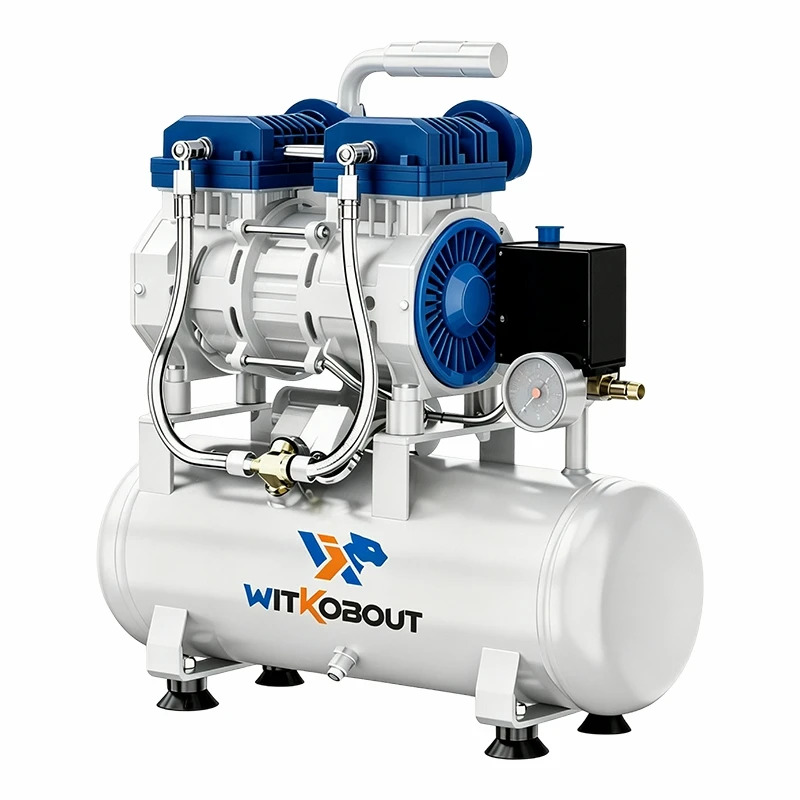
Air storage is another important part of compressed air system design. An Air Tank, also known as an air receiver or compressed air storage tank, stores compressed air for use when demand temporarily exceeds the compressor’s immediate delivery capacity. It can also help reduce rapid pressure fluctuations and provide a buffer between the compressor and downstream equipment.
In facilities with intermittent or rapidly changing air consumption, demand can vary considerably during a production cycle. Pneumatic tools may operate in short bursts, automated machinery may consume air at different stages, and several production units may start simultaneously. An appropriately sized air receiver can help accommodate these fluctuations and support more stable system operation.
Hangzhou Witkobout Technology Co., Ltd. includes Air Tank among the specified products associated with this article. For industrial buyers, selecting an air tank involves more than determining its physical dimensions. Important factors include the system’s working pressure, air demand profile, compressor output, available installation space, applicable safety requirements, and the intended role of the tank within the system.
An air receiver can provide several operational functions. It offers temporary storage, helps reduce the frequency of pressure changes, and can support compressor control strategies. Depending on the system configuration, storage may also help reduce unnecessary compressor cycling. The actual benefit depends on compressor type, control settings, demand patterns, and the relationship between the receiver and the rest of the installation.
The tank’s position within the compressed air system is also relevant. A receiver installed upstream of an air dryer can help accommodate demand fluctuations and may assist with cooling and condensate separation, depending on the system design. A receiver downstream of the dryer can provide storage for treated air and help maintain supply during short periods of high demand. Some installations use both arrangements to address different operating needs.
Regardless of its location, an air receiver must be designed and operated according to applicable pressure-vessel regulations and safety requirements. Buyers should verify rated working pressure, material and construction specifications, inspection documentation, drainage arrangements, and compatibility with the intended application. Appropriate pressure-relief devices and regular inspections are essential parts of safe operation.
Coordinating Air Dryers and Air Tanks
Air treatment and storage equipment are most effective when selected as parts of a coordinated compressed air system. A compressor generates the air supply, the air receiver helps buffer demand, and the air dryer manages moisture according to the required operating conditions. Filters, separators, drains, and distribution piping may also be needed, depending on the application.
When these components are poorly matched, the entire system can experience operational problems. Insufficient dryer capacity may affect air quality during peak demand, while inadequate storage can contribute to pressure drops when several machines require air simultaneously. Excessive pressure drop through treatment equipment can also increase the pressure that the compressor must produce to meet downstream requirements.
For this reason, system planning should start with an assessment of actual consumption rather than selecting components solely on the basis of general equipment descriptions. Engineers and buyers may need to calculate average and peak flow rates, identify simultaneous demand, establish the required pressure range, and determine the necessary moisture level. These figures can then guide the selection of compressor capacity, receiver volume, dryer type, and associated treatment equipment.
Hangzhou Witkobout Technology Co., Ltd.’s Air Dryer and Air Tank product categories address two distinct but complementary functions within compressed air systems. An air dryer focuses on moisture control, while an air tank provides compressed air storage. Their specifications and configuration should be evaluated together with the compressor and the requirements of the production process.
Industrial users should also consider future expansion. Adding production machinery or increasing operating hours can change the demand profile of an existing compressed air network. Planning for reasonable flexibility can help reduce the likelihood of premature equipment replacement, although any additional capacity should be based on realistic operating forecasts rather than unnecessary oversizing.
Applications Across Industrial Operations
Compressed air is used in many sectors, including general manufacturing, automotive production, electronics assembly, food processing, packaging, and machinery operation. Each application has its own requirements for pressure stability, moisture control, and air cleanliness.
In general manufacturing, pneumatic tools and actuators depend on a reliable supply of compressed air. Moisture can contribute to corrosion and may affect the performance of pneumatic components. Air drying and suitable condensate management can help reduce these risks when the system is designed and maintained appropriately.
In automated production lines, fluctuations in compressed air pressure can influence the operation of cylinders, valves, and other pneumatic equipment. An air receiver can help buffer short-term variations in demand, while correctly sized distribution piping and treatment equipment support the delivery of air at the required pressure and quality.
Food processing and electronics manufacturing may require additional attention to compressed air quality, depending on whether the air contacts products or sensitive components. In such environments, moisture removal alone may not be sufficient. Filtration, oil control, microbial risk management where relevant, and verification of the required air-quality standard may also be necessary. Buyers should define these requirements before selecting equipment.
The suitability of an Air Dryer or Air Tank therefore depends on the actual application rather than on a general industry label. Different production environments may require different capacities, configurations, materials, and maintenance procedures. A clear understanding of operating conditions helps businesses select equipment that fits their processes.
Energy Efficiency and Operating Costs
Energy consumption is a significant consideration in compressed air systems because compressors can account for a substantial share of a facility’s electricity use. Although Air Dryer and Air Tank products do not replace the compressor, their selection and integration can influence system efficiency and operating costs.
One consideration is pressure drop. Air treatment equipment, filters, piping, and fittings create resistance to airflow. If pressure losses are excessive, the compressor may need to operate at a higher discharge pressure to provide the pressure required by downstream equipment. Proper equipment sizing and regular maintenance can help limit avoidable losses.
Another factor is moisture control. Different air dryer technologies have different energy requirements and performance characteristics. Refrigerated dryers and desiccant dryers should be compared according to the required pressure dew point, operating conditions, and total cost of ownership. A more advanced drying technology is not automatically necessary for every application; the appropriate choice is the one that reliably meets the process requirements without excessive cost.
Air storage can also support more efficient compressor operation when incorporated into a suitable control strategy. Adequate receiver capacity may reduce short cycling in some systems and help accommodate brief demand peaks. However, storage does not eliminate the need to match compressor output with actual demand, and its effectiveness depends on the system’s operating pattern.
Businesses evaluating compressed air equipment should consider initial purchase costs alongside electricity use, maintenance, replacement components, inspection expenses, and expected service life. This broader assessment can provide a more realistic view of long-term value than purchase price alone.
Equipment Reliability and Maintenance Planning
Reliable compressed air equipment depends on appropriate installation, operating conditions, and maintenance. Air dryers may require inspection of heat exchangers, filters, drains, desiccant materials, or refrigeration components, depending on the technology used. Air tanks require attention to condensate drainage, corrosion, pressure-relief devices, and scheduled inspections under applicable regulations.
Maintenance planning should follow the equipment manufacturer’s instructions and the requirements of the installation. Routine checks can help identify blocked filters, faulty drains, leaks, abnormal pressure changes, or other issues before they cause significant disruption. Keeping records of inspection results and replacement components can also help maintenance teams identify recurring problems.
For buyers considering Hangzhou Witkobout Technology Co., Ltd. products, relevant procurement questions include the available specifications, rated capacity, working pressure, installation requirements, spare-parts availability, and technical support arrangements. The exact specifications and service provisions should be confirmed directly with the company before a purchase decision is made.
Clear technical documentation is particularly important when equipment will be integrated into an existing compressed air network. Buyers may need installation drawings, operating instructions, maintenance schedules, and relevant conformity or inspection documents. Confirming these details in advance can help reduce uncertainty during installation and commissioning.
Choosing Equipment for Specific Requirements
Selecting compressed air equipment involves balancing air quality, storage capacity, pressure requirements, energy use, safety, and maintenance. An effective procurement process begins by documenting how the system will be used and identifying the performance criteria that matter most.
For an Air Dryer, the main questions include the required pressure dew point, flow rate, inlet conditions, ambient temperature, pressure drop, and drying technology. For an Air Tank, buyers should review working pressure, volume, material, installation position, safety devices, and compliance with applicable regulations.
The compressor itself must also be considered. Its rated flow, control method, duty cycle, and operating pressure influence the requirements of the supporting equipment. A dryer or receiver selected without reference to compressor performance and downstream consumption may not deliver the expected results.
Hangzhou Witkobout Technology Co., Ltd. is associated with Air Dryer and Air Tank products relevant to this equipment category. For businesses comparing suppliers, reviewing verified technical specifications and confirming the intended application are essential steps. The final configuration should be based on the site’s actual requirements and, where necessary, an engineering assessment of the complete system.
As industrial production continues to depend on compressed air, businesses will continue to pay attention to moisture management, pressure stability, energy efficiency, and equipment safety. Air dryers and air tanks remain important elements in addressing these needs when appropriately specified and maintained.
Through its participation in the industrial equipment market, Hangzhou Witkobout Technology Co., Ltd. provides a company name for buyers researching compressed air solutions and related equipment categories. Its Air Dryer and Air Tank offerings represent complementary areas of interest for businesses planning new installations, upgrading existing systems, or reviewing the performance of their compressed air infrastructure. Buyers can consult the company’s official website and contact its team to confirm product availability, specifications, and suitability for individual projects.
About Hangzhou Witkobout Technology Co., Ltd.
Hangzhou Witkobout Technology Co., Ltd. is a company identified for this article as operating in the industrial equipment sector, with Air Dryer and Air Tank specified as its relevant product categories. These products serve complementary functions in compressed air systems: air dryers are used to reduce moisture in compressed air, while air tanks store compressed air and help accommodate fluctuations in demand.
For industrial users, selecting suitable compressed air equipment requires consideration of operating pressure, flow rate, air-quality requirements, installation conditions, safety standards, and maintenance needs. Businesses interested in Hangzhou Witkobout Technology Co., Ltd.’s products can visit its official website at www.witkobout.com to obtain further company and product information and confirm current specifications, available configurations, and service arrangements.
Address: Room 1211, Huaxia Center, Cangqian Street, Yuhang District, Hangzhou City, Zhejiang Province
Official Website: https://www.witkobout.com/
Xu
Hangzhou Witkobout Technology Co., Ltd.
hzzhikongbao@163.com
Legal Disclaimer:
EIN Presswire provides this news content “as is” without warranty of any kind. We do not accept any responsibility or liability
for the accuracy, content, images, videos, licenses, completeness, legality, or reliability of the information contained in this
article. If you have any complaints or copyright issues related to this article, kindly contact the author above.

Media gallery