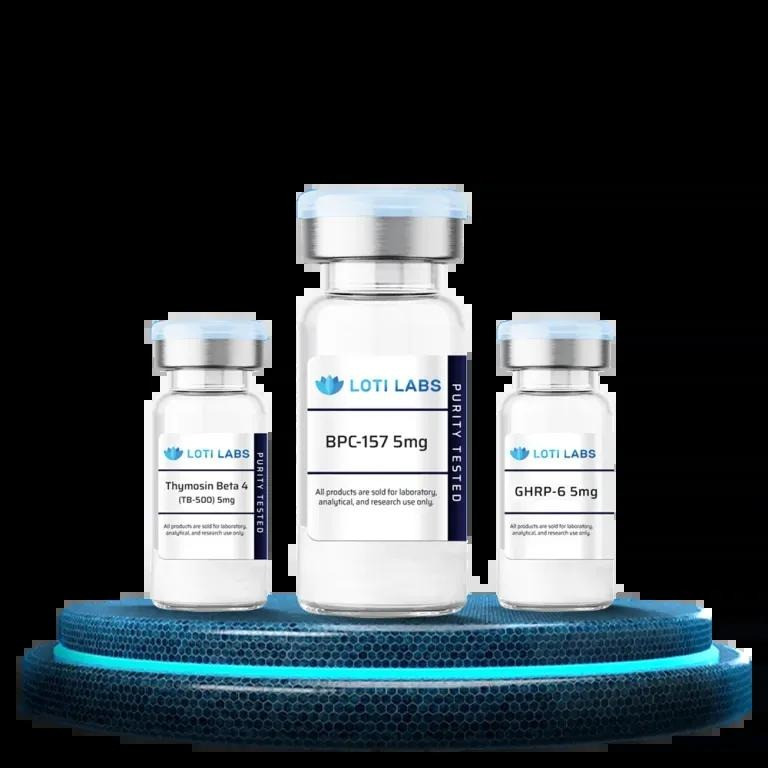
The Power of Peptides: Unpacking Mechanisms, Structure, and Research Applications in Biochemistry & Therapeutics
Tampa, United States – November 13, 2025 / Loti Holdings LLC /
Peptide Science: Mechanisms and Research Applications
Peptides are short chains of amino acids that function as signaling or structural molecules. Their study provides insight into how sequence, structure, and chemical properties influence biochemical pathways. Research focuses on formation, receptor interactions, enzymatic modulation, and structural roles, with applications in therapeutic design, metabolic studies, tissue repair, and antioxidant research.
Structure and Formation of Peptides
Peptides are composed of amino acids linked by peptide bonds. A peptide bond forms through a condensation reaction between the amino group of one residue and the carboxyl group of another, creating a covalent backbone with a free N-terminus and C-terminus. The primary sequence encodes information that dictates molecular recognition, stability, and interaction surfaces. Short peptides, such as dipeptides and tripeptides, exhibit high solubility and rapid turnover, whereas longer oligomers begin to form secondary structures such as alpha helices or beta sheets. Chain length and sequence directly influence chemical stability, susceptibility to enzymatic degradation, and receptor affinity.
Peptides are distinct from proteins primarily by size. Peptides are generally fewer than 50 residues, often acting as signaling molecules, while proteins are longer, folding into stable three-dimensional domains and performing structural, catalytic, or transport functions. There is a continuum between long peptides and small proteins, with functional overlap. For example, insulin is classified as a peptide hormone, whereas collagen is a structural protein with repeating polypeptide chains.
Mechanisms of Peptide Action
Peptides exert effects through several recurring mechanisms. They can bind specific receptors to trigger intracellular signaling cascades, modulate enzymes through competitive or allosteric interactions, or disrupt membranes in the case of antimicrobial sequences. Receptor binding depends on complementary surfaces formed by side chains, and sequence determines affinity and specificity. Receptor activation often engages G-proteins or kinase pathways, leading to second-messenger responses such as cAMP or calcium flux, which alter gene expression, enzymatic activity, or cellular metabolism. Signal duration and intensity are influenced by peptide stability and receptor kinetics.
Peptides also participate in paracrine and endocrine signaling, enzyme inhibition, and membrane interactions. Competitive binding can occupy catalytic sites, while allosteric interactions modify enzyme conformation and activity. Antimicrobial peptides act by interacting with lipid membranes, altering permeability, and compromising microbial integrity. These diverse mechanisms make peptides versatile tools for biochemical modulation and experimental investigation.
Classification and Functional Categories
Peptides are commonly classified by length and biological role. Dipeptides contain two residues and frequently serve as metabolic intermediates or signaling fragments. Oligopeptides, typically 3–20 residues, often act as hormones or rapid-response signaling molecules. Polypeptides exceed 20–50 residues and can adopt protein-like domains, enabling structural or enzymatic functions. Classification informs experimental design, as shorter peptides diffuse more rapidly but are more susceptible to proteolysis, whereas longer polypeptides may require folding assistance or stabilization strategies.
Key research-focused peptide classes include:
-
Collagen peptides, which influence extracellular matrix and connective-tissue protein synthesis.
-
BPC-157, studied for angiogenic signaling, inflammation modulation, and structural repair pathways.
-
GLP-1 receptor analogs, which act on metabolic pathways through receptor-mediated signaling.
-
Antimicrobial peptides, targeting microbial membranes and modulating innate immune pathways.
-
Thymosin-like peptides, investigated for immune-cell regulation and cytokine modulation.
Each class varies in mechanism and experimental evidence, with some supported primarily by preclinical models and others studied in controlled laboratory conditions.
Peptide Mechanisms in Structural and Metabolic Studies
Research has mapped several mechanistic pathways for peptides in tissue and metabolic systems. Collagen-derived peptides provide substrates for extracellular matrix components and may stimulate fibroblast activity and protein synthesis pathways. Structural repair peptides influence local growth-factor signaling and angiogenesis, affecting tissue remodeling. Peptides acting on metabolic receptors, such as GLP-1 analogs, engage transmembrane receptor pathways and downstream second messengers, modulating glucose, lipid, and cellular signaling networks. Antimicrobial sequences affect membrane integrity and microbial viability through amphipathic interactions. Thymosin-like peptides regulate immune signaling cascades, including T-cell maturation and cytokine responses.
Understanding these mechanisms informs experimental design, including sequence selection, chemical modifications to enhance stability, and delivery strategies for bioavailability. Peptide length, folding propensity, and post-synthetic modifications influence receptor interactions, half-life, and functional outcomes.
Delivery, Stability, and Formulation Considerations
Peptides face challenges in chemical stability and cellular delivery. Short sequences are prone to proteolytic degradation, whereas longer polypeptides require proper folding or chemical modifications to maintain activity. Formulation approaches include chemical stabilization, acetylation, cyclization, or encapsulation in lipid-based systems. Bioavailability and systemic distribution are influenced by molecular size, polarity, and structural conformation. Experimental studies often evaluate modified forms to enhance resistance to enzymatic degradation and improve interaction with target receptors or signaling pathways.
Evidence Levels and Experimental Context
The level of supporting evidence varies across peptide classes. Collagen peptides and GLP-1 analogs have been extensively characterized in controlled laboratory experiments. BPC-157 and thymosin-like peptides remain primarily in preclinical or early-stage investigations. Antimicrobial peptides are supported by mechanistic studies and targeted experimental programs. Mapping evidence levels aids in selecting peptides for research purposes and interpreting observed molecular effects.
Summary
Peptides are fundamental biochemical modulators, functioning through receptor binding, enzyme modulation, and structural interactions. Classification by length and biological role clarifies experimental design and mechanism of action. Key research-focused peptides include collagen fragments, BPC-157, GLP-1 analogs, antimicrobial sequences, and thymosin-like peptides, each with distinct pathways and evidence levels. Understanding peptide formation, receptor interactions, chemical stability, and formulation strategies is essential for experimental investigations. Rigorous verification of sequence, purity, and structural characteristics ensures reproducible and scientifically valid results.


Contact Information:
Loti Holdings LLC
–
Tampa, FL –
United States
Loti Labs
18775684522
https://lotilabs.com