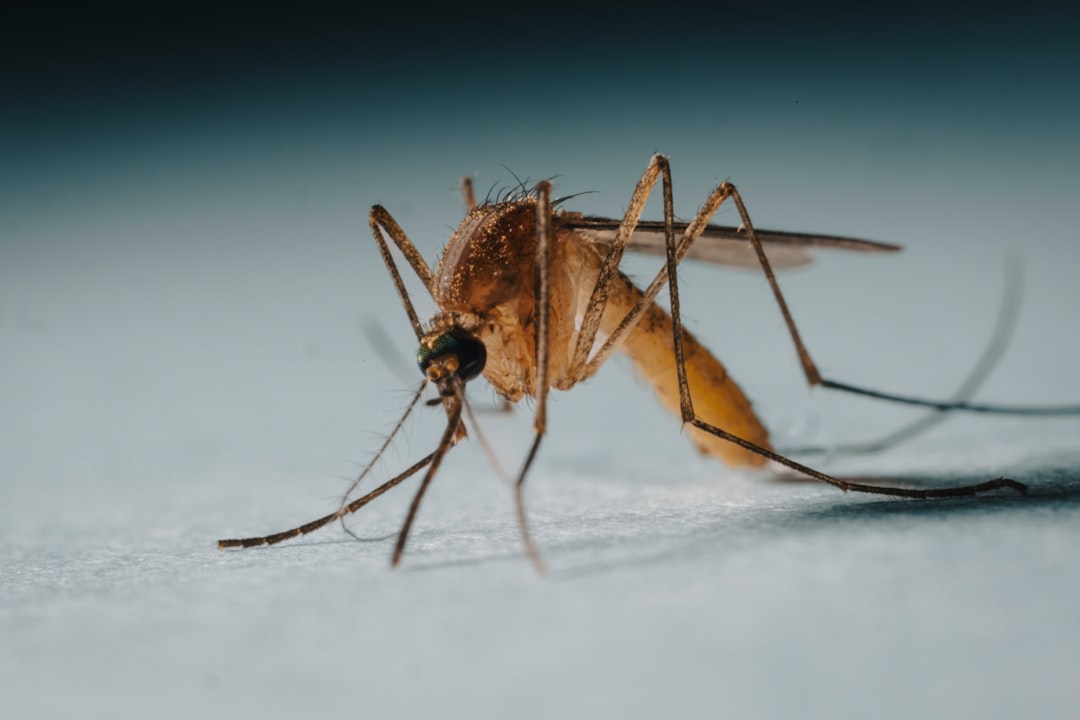
 Photo from Unsplash
Originally Posted On: https://sloanestreetsurgery.co.uk/articles/chikungunya-virus-what-travellers-need-to-know/
Chikungunya: Symptoms, Prevention and Vaccine Options
Chikungunya is a mosquito-borne virus that can cause sudden fever and severe joint pain. This guide covers symptoms, prevention and when vaccination may be worth considering for travellers.
What is Chikungunya?
Chikungunya is an arbovirus, meaning it is transmitted by arthropods such as mosquitoes. It spreads to humans through the bite of infected Aedes mosquitoes, most commonly Aedes aegypti and Aedes albopictus, the same species that transmit Dengue and Zika. It is not spread through direct person-to-person contact.
Chikungunya symptoms
Symptoms usually begin 3–7 days after a mosquito bite and often start very suddenly.
Typical symptoms include:
- high fever
- severe joint pain (especially hands, feet, wrists and ankles)
- muscle aches
- headache
- rash
- fatigue
Most people recover within 1–2 weeks, but joint pain may persist for months or even years. Older adults and newborns exposed around the time of birth may be more vulnerable to complications.
There is currently no specific antiviral treatment, and aspirin and non-steroidal anti-inflammatories are usually avoided until dengue has been ruled out.
How to prevent Chikungunya
The mosquitoes that spread Chikungunya bite during the day, especially around dawn and dusk, and they breed near stagnant water. Prevention focuses on reducing bites:
Insect repellent
Choose a repellent containing one of the following:
- DEET (20–50%)
- Picaridin/Icaridin (20%)
- IR3535
Oil of lemon eucalyptus is also used but not for children under 3.
Apply sunscreen first, then repellent, and reapply frequently, especially after swimming or sweating.
Protective clothing
Wear long sleeves and trousers where possible. Clothing can be treated with permethrin, an insecticide that is safe for use on fabrics and helps prevent mosquitoes landing or biting through.
Environment
Aim for air-conditioned rooms with mosquito screens or use ceiling or bedside fans.
If these aren’t available, use a permethrin-treated bed net (including for daytime naps) and consider plug-in vaporisers or mosquito coils.
Reduce exposure
Avoid areas with stagnant water, where mosquitoes breed.
Vaccination may also be considered in addition to bite precautions.
Chikungunya vs Dengue vs Zika
It is initially difficult to distinguish these three infections so consulting with a doctor early is crucial.
Lab testing is the only sure way to tell which infection is causing your symptoms. In general, Chikungunya is characterised by the very sudden onset of fever associated with severe joint pain, whereas zika often causes mild fever or no fever at all, with conjunctivitis and rash but only mild joint pain and a quick resolution.
Dengue causes sudden high fever, often with a severe headache, bleeding tendencies, abdominal pain and vomiting. Although there is muscle and bone pain if joint pain occurs it tends to be less dramatic than Chikungunya.
Zika has a stronger association with Guillain-Barre syndrome and during pregnancy congenital issues. Chikungunya and dengue cause neurological complications but less commonly.
Where is Chikungunya found?
Chikungunya has been reported in over 110 countries across Asia, Africa, the Americas and parts of Europe. Current outbreaks are occurring in Sri Lanka, India and Mauritius, and there is a high risk in India, Brazil, Colombia, Pakistan, the Philippines, Thailand and Kenya.
Risk increases during the wet season and can be present even when a country is not officially reporting an outbreak, provided the mosquito vector (a mosquito capable of transmitting the virus) is present.
Some temperate regions, including parts of Southern Europe, have also reported local transmission, so global travel risk is evolving.
Outbreak status can change quickly. Check official travel health advice for your destination before travel.
Chikungunya vaccines in the UK
Two vaccines are approved and available for travellers in the UK: IXCHIQ and VIMKUNYA.
IXCHIQ
- A live attenuated vaccine, meaning it uses a weakened form of the virus that cannot cause infection in healthy individuals but produces a strong immune response.
- Approved in the UK for adults over 18.
- Not suitable for people with weakened immune systems or adults over 65.
VIMKUNYA
- A virus-like particle vaccine (cannot replicate or cause infection).
- Approved for individuals 12 years and older.
- Has shown good immune response and may be safer for more vulnerable groups, although long-term data is not available, especially for older patients, pregnant women and the immunocompromised.
- Given as a single dose.
Who should consider a Chikungunya vaccine?
The UK Joint Committee on Vaccination and Immunisation advises that vaccination is not routine for every traveller. It should be considered when there is significant risk of exposure, for example:
- travel to areas with active outbreaks
- longer stays
- travellers with higher personal risk
The vaccine is definitely not a substitute for bite avoidance and we still feel that repellent, clothing, nets and room screening are crucial.
We currently stock the VIMKUNYA vaccine at Sloane Street Surgery.
Book an appointment
If you’d like to discuss travel risks, symptoms or vaccination options, our doctors are always happy to help. You can book an appointment online here or call us on 0207 245 9333.
About the author
Dr Iona Cobb
MBBS DCH DRCOG MRCGP
“I love working with the other doctors and staff, but what sticks with me are the interesting conversations we have with our patients, every day”.
As a GP, I have worked both in the NHS and privately and spent 8 years as School Doctor to The Hall School in Hampstead. I joined Sloane Street Surgery in 2015.
I particularly like seeing teenagers, adults and the elderly. I really enjoy general medicine, obstetrics and gynaecology, care of older patients and looking after patients in distress.
The joy of being a GP in a group practice working alongside other doctors is that I learn every day, through my own research but also constant conversation.