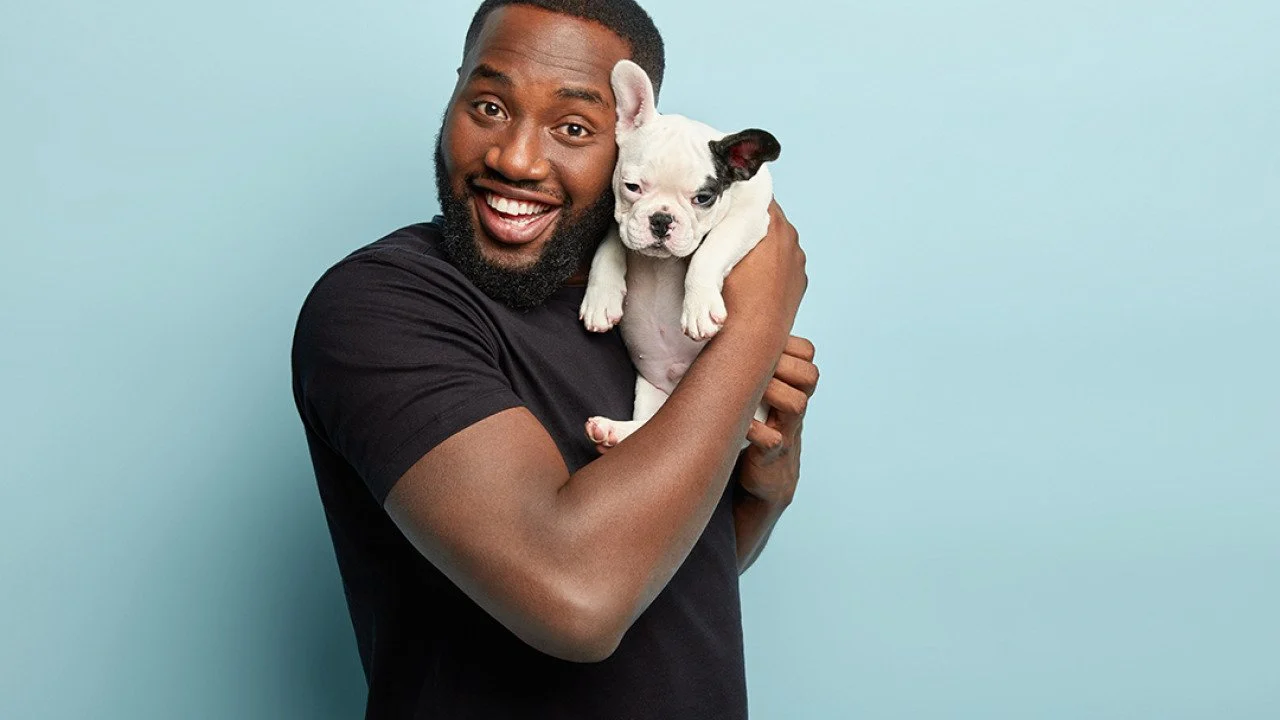

Cast Of Thousands // Shutterstock
How to bond with your dog
It may seem like common sense, but when it comes to behavior, itâs important to remember that dogs express themselves differently from us. This means itâs easy to misinterpret their behavior, especially when they appear to be âacting outâ and mouthing, nipping at you, or engaging in rough play.
In reality, these are attempts to connect and spend time with you, as annoying or misunderstood as they may be. But, thereâs good news. Itâs easy to overcome these behavioral issues and channel this energy into more positive bonding experiences through routine activities and simple exercises like fresh food training.
Below, Ollie breaks down exactly how to do that, sharing the importance of training in bonding and how to better understand what your dogâs behavior is trying to tell you.
Dog cooperation and trust through training
Training isnât something that ends after puppyhood or once your dog settles into their new home. Itâs a lifelong conversation, and can change and adapt to ways that work best for the two of you. At its best, training is a cooperative language you build together, one that lays the foundation for real dog cooperation and lasting connection.
While cues like âsitâ and âstayâ are useful, theyâre only the starting point. True training goes beyond obedience and focuses on helping your dog develop everyday life skills, like focus, confidence, and decision-making.
Decoding ârough loveâ and overcoming behavioral issues
Worried that your dogâs nipping or rough play means theyâre upset or unhappy? Or wondering if dog mouthing is a sign of affection? Take a deep breath and fret not. Most of the time, all of this behavior actually means the exact opposite. Mouthing, or when your dog puts their mouth on you without aggressive intent, is how puppies play with their littermates. So when your dog does it to you, itâs a clear sign they feel safe, comfortable, and bonded to you.
To limit or put a stop to this kind of behavior, the key is all about redirection, not punishmentâand turning all that âmouthyâ energy into a bonding moment. Here are a few ways to do that when your dog starts mouthing or engaging in rough play:
- Offer up a tug toy or another sturdy toy for a structured game of tug-of-war.
- Pause rough play in the moment if it gets too intense, and resume once your dog calms down.
- Reward gentle play with praise or treats to reinforce their good behavior.
âVelcroâ dogs vs. pups with separation anxiety
Itâs easy to get confused about why your dog is so glued to your side. Is it the result of a healthy bond (sometimes called a âvelcro dogââthey canât seem to stay away), or is it separation anxiety? The differences are clearer than you might think. A bonded dog acts confident and calm, happy to be near you, but secure enough to explore and be on their own. On the other hand, an anxious dog can show frantic behaviors, like pacing, whining, or panicking when youâre out of sight, which are all classic signs your dog is unhappy.
No matter which camp your pup falls into, or if theyâre somewhere in between, itâs important to bond and engage with them in ways that promote dog anxiety relief. Keep reading to get into some easy ways to incorporate this into your routine next.
5 activities to strengthen your bond with your dog
For quality time: The sniffari
Taking your pup on a decompression walk or sniffari (aka a sniff-filled outing) is different from taking them on a walk. While classic walks are more focused on exercise and distance, sniffaris are slower and all about letting your dog take the lead and follow their nose. Think of them as a mini adventure for the sensesâone that not only satisfies your dogâs natural curiosity but also provides mental stimulation, provides dog anxiety relief, builds confidence, and strengthens your bond.
For dog mental stimulation: Training tricks
Whether your pup went through an intensive bootcamp training or youâve taught them the basics yourself, itâs important to promote dog mental stimulation through continued training. Try sharpening their skills or teaching them something new, be it refreshing their greeting skills (no jumping on new friends) or finally getting them to master the paw shake.
For dog relaxation: Grooming or massages
Take matters into your own hands and create an at-home spa-inspired experience for the ultimate in dog relaxation. Think light grooming activities, like gently brushing out their coat, moisturizing and massaging dry paws, or giving them a full-body massage (combined with a thorough belly rub, of course).
For focus and engagement: Hand feeding
Itâs no secret that pups are extremely motivated by food, which makes it a great way to train and connect with your dog. Rewarding good behavior with treats is a classic, but hand-feeding your dog fresh meals is a more hands-on way to bond. When food is shared intentionally, rather than simply delivered in a bowl, it becomes a moment of connection and turns everyday meals into meaningful time together.
If you choose to give your pup treatsâeither from the pet food aisle or from your tableâbe mindful of which foods are toxic to dogs to avoid unintentional digestive issues or other adverse side effects. Additionally, Ollie in-house veterinarians and scientists recommend keeping treats to no more than 10% of your dogâs diet to ensure they receive the proper nutrients without consuming excess calories.Â
For interactive play: Fetch and tug
Itâs not a secret: Dogs love to play, and they especially love playing with you. Engaging in regular, daily play not only strengthens your bond with your pup, but it also provides crucial mental stimulation and can help them overcome behavioral issues like anxiety. Fetch and pulling on a tug toy are classics, but itâs worth it to experiment with different games and toys to figure out exactly what your dog loves.
For physical touch: Downtime cuddles
Bonding with your dog doesnât always mean go, go, go. Sometimes the best connections happen when you hit pause together. Your pup loves being near you, whether that means lounging on the couch or snuggling up in bed. Adding in gentle pets, ear scratches, or a good belly rub can make their day. And fun fact: A study published in a 2024 issue of Scientific Reports found that, during interactions, the heart rate variabilityââ of owners and their dogs mirror one another, so resting side by side with your dog can actually sync your heart rates, meaning your downtime is fostering a literal heartbeat connection.
Creating a lasting bond with your pup isnât necessarily a linear process. Dogs have their moods and preferences. Some days your dog may love training with you, and other days they might not be in the mood to put in the work. Respect what your dog is telling you, and give them breaks or change activities when you need to. By respecting their choices, youâll build a mutual, healthy relationship that they genuinely love being a part of.
This story was produced by Ollie and reviewed and distributed by Stacker.