2026-07-15T08:01:00
(BPT) – Productivity is up. Headcount is stable. On paper, things look fine.
But a new nationwide study suggests that for many organizations, the surface metrics are hiding something more serious. Workers are reporting a slow accumulation of workforce strain that doesn’t show up in dashboards until it’s expensive to fix.
BambooHR surveyed more than 1,200 full-time employees and business leaders across six major industries to understand the state of the employer-employee relationship in 2026. The researchers introduced a term for what they found: “dignity debt.” This is the liability organizations accrue when they prioritize speed, cost-cutting and AI adoption over the transparency, mentorship and trust that make the workforce contract sustainable.
The gap between what leaders see and what workers experience
Workers and their employers agree on at least one thing: Productivity is up. Eighty-one percent of executives believe it, and 73% of workers confirm it. But the same study finds that 85% of employees are experiencing significant workplace stress, 81% want to change careers entirely and nearly a third fear they can’t make ends meet on a full-time salary.
Productive, in other words, doesn’t mean sustainable.
Three signs your organization may be carrying dignity debt
The research identifies several patterns common to high-stress, low-trust workplaces. These are worth examining honestly:
1. You’re confident in your hiring process, but can’t fill roles. Four in five executives say their hiring process identifies the right talent. More than half say they struggle to find qualified candidates. When that gap persists, the work doesn’t wait. Instead, it redistributes to existing staff, stretching teams and deferring the investments that would build a stronger pipeline.
2. You know about a problem you haven’t fixed. More than half of business leaders admit they’re aware of an operational flaw they’ve chosen not to address because the cost of fixing it feels too high. Workers notice. Fifty-seven percent agree there’s a fundamental flaw in how their industry operates. Shared awareness of an unaddressed problem erodes trust faster than almost anything else.
3. You’re deploying AI without redesigning work around it. More than half of workers say AI has disrupted their daily work, and nearly half report negative reactions to workplace AI tools. At the same time, 49% of leaders admit AI hasn’t yet delivered tangible value and may be overhyped. If productivity expectations are rising while role clarity and training investment aren’t keeping pace, the gap becomes a retention risk.
What workers are actually asking for
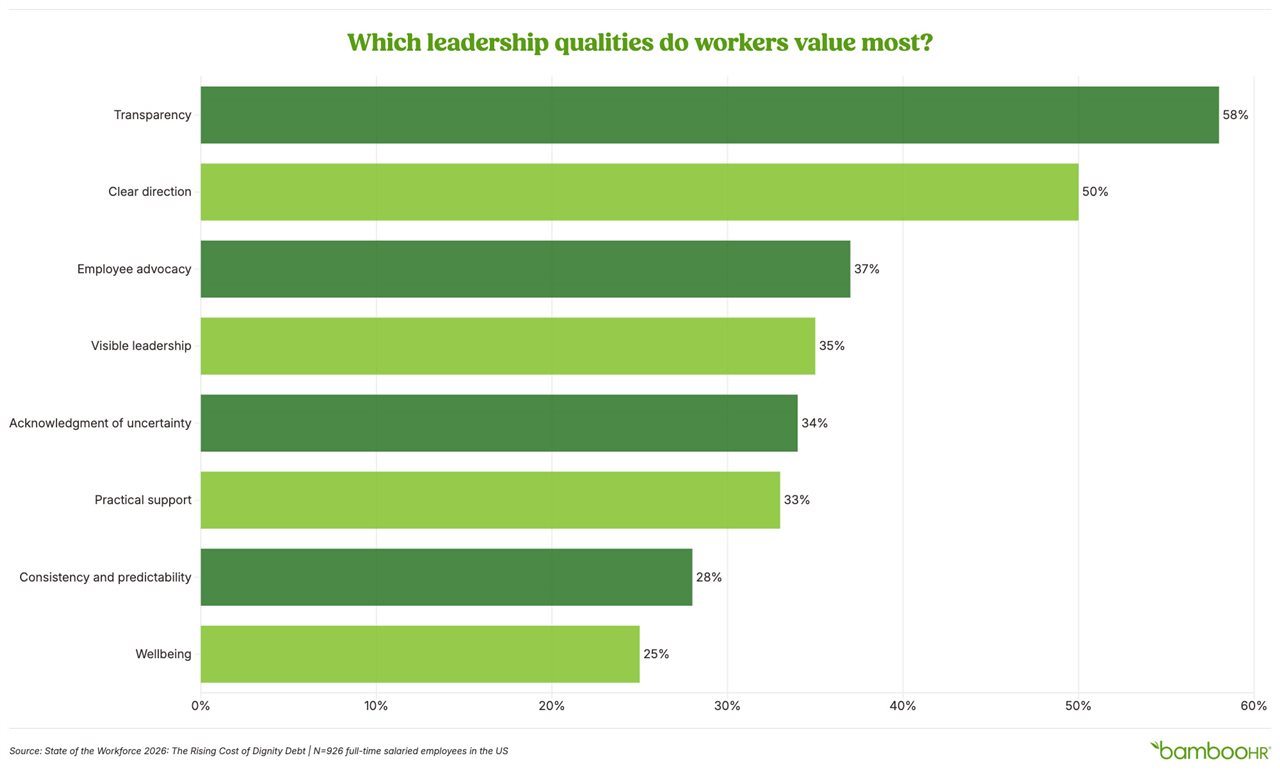
What workers want, it turns out, is what most organizations already claim to value. Fifty-eight percent name transparency as their top leadership quality. Nine in ten want leaders who are honest about uncertainty and present during hard moments. Nearly three in four stay in a role primarily because of work-life balance and flexibility. Not equity grants. Not ping-pong tables. The basics.
Where to start
The BambooHR report points to three high-leverage entry points for organizations looking to reverse the trend:
- Make transparency a consistent operating practice rather than a crisis communication tool.
- Pick one known, visible problem and fix it publicly. The credibility return outweighs the cost.
- Pair any AI deployment with explicit work redesign, including clear measurement, updated role expectations and honest communication about how adoption affects careers.
The organizations that address dignity debt now, the research concludes, will have a meaningful advantage when the labor market tightens again. The ones that don’t may find the workforce they’re counting on has quietly decided not to wait.
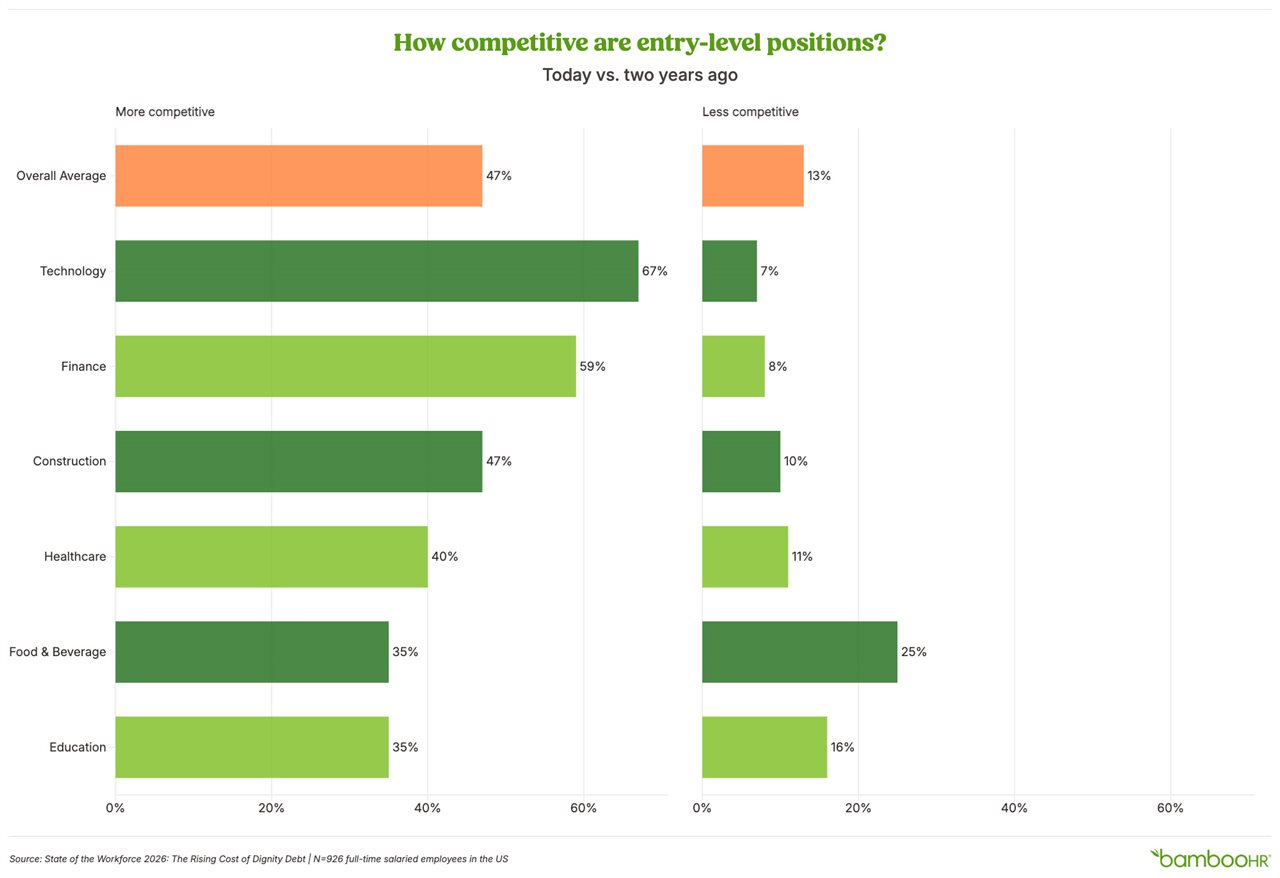
The full State of the Workforce 2026 report, including industry-specific findings across technology, healthcare, finance, food and beverage, construction and education, is available at bamboohr.com.