
Key Takeaways
- Opening an imaging center typically requires $1.5M-$3M in startup capital, with MRI equipment alone accounting for $1.2M-$2.2M of that investment.
- Legal requirements vary significantly by state – Certificate of Need (CON) laws, active in states like New York and roughly 35-38 states total, can add 6-12 months to your timeline before you see a single patient.
- Staffing consumes 40-50% of operating expenses, making radiologist coverage strategy one of the most consequential decisions a new center will make.
- Virtual contrast supervision – like the service offered by ContrastConnect – gives new imaging centers a path to CMS compliance without the overhead of full-time onsite radiologists from day one.
- Equipment choices (new vs. refurbished) and financing structure can dramatically shift how much capital you need upfront – a trade-off worth understanding before signing any lease.
Starting an imaging center is one of the more capital-intensive ventures in outpatient healthcare. The margins can be strong, the community need is often real, and demand for diagnostic imaging continues to grow – but the gap between intention and opening day is filled with regulatory hurdles, equipment decisions, and staffing costs that can catch first-time operators off guard. Here is a grounded look at what it actually takes.
$1.5M-$3M to Open: What You’re Really Getting Into
The $1.5M-$3M startup range reflects genuine variability based on which modalities you offer, whether you are building out a raw shell or renovating an existing space, and how aggressively you are equipping for volume from day one.
The primary cost drivers are equipment and facility construction. MRI systems alone can consume the majority of your equipment budget before you have purchased a single CT scanner or ultrasound unit. Add PACS/RIS infrastructure, lead shielding, specialized electrical and HVAC systems, and 6-12 months of working capital, and the full picture comes into focus quickly.
Investors and operators who struggle most tend to underestimate working capital needs. Licensing and accreditation timelines run 4-6 months minimum – longer in CON states – meaning the center is spending money well before it is billing. Underfunding that gap is one of the most cited reasons new imaging centers fail.
Legal Requirements Before Day One
Regulatory compliance determines whether you can open at all. The framework involves three overlapping layers: state licensing, accreditation, and federal privacy law.
State Licensing and Whether CON Laws Apply to You
Every state has its own facility licensing process, typically administered through the state health department. Inspections cover your physical space, radiation safety protocols, equipment maintenance programs, and staff credentialing. Annual renewals often include radiation safety audits and quality assurance reviews.
What adds serious complexity is Certificate of Need (CON) legislation. Estimates place the number of states with active CON programs at 35-38, plus Washington D.C. These programs require prospective owners to demonstrate that a new imaging center serves a genuine community need before receiving approval. CON requirements vary considerably by state – New York, for example, maintains a rigorous CON process that can add 6-12 months to your opening timeline, with no guarantee of approval. Confirming whether CON laws apply to imaging centers in your specific state is an early and necessary step.
Most states also require individual state licensure for radiologic technologists, on top of national certifications like those from the American Registry of Radiologic Technologists (ARRT). Tracking those credentials is an operational responsibility that starts before your first scan.
ACR/IAC Accreditation for Medicare Reimbursement
Medicare reimbursement eligibility requires accreditation from a recognized body – most commonly the American College of Radiology (ACR) or the Intersocietal Accreditation Commission (IAC). Both programs evaluate equipment performance, technologist qualifications, image quality, and safety protocols through a peer-review process. The ACR describes its accreditation as a voluntary program, but operating without it means forfeiting Medicare and most commercial payer contracts. Accreditation cycles typically run every three years.
HIPAA Compliance Systems
HIPAA compliance requires three categories of safeguards: physical (secured areas, controlled access), technical (encryption, audit controls across PACS and modality worklists), and administrative (staff training, documented policies, breach notification protocols). In imaging specifically, Protected Health Information is embedded in DICOM metadata headers – meaning your PACS, teleradiology connections, and how you handle patient image CDs all fall under HIPAA scope. These systems must be in place before the first patient walks in.
Equipment Costs: Where Your Capital Goes
Equipment selection is where most of the capital decision-making happens, and where the trade-offs between clinical ambition and financial reality tend to surface.
MRI Systems: $1.2M-$2.2M
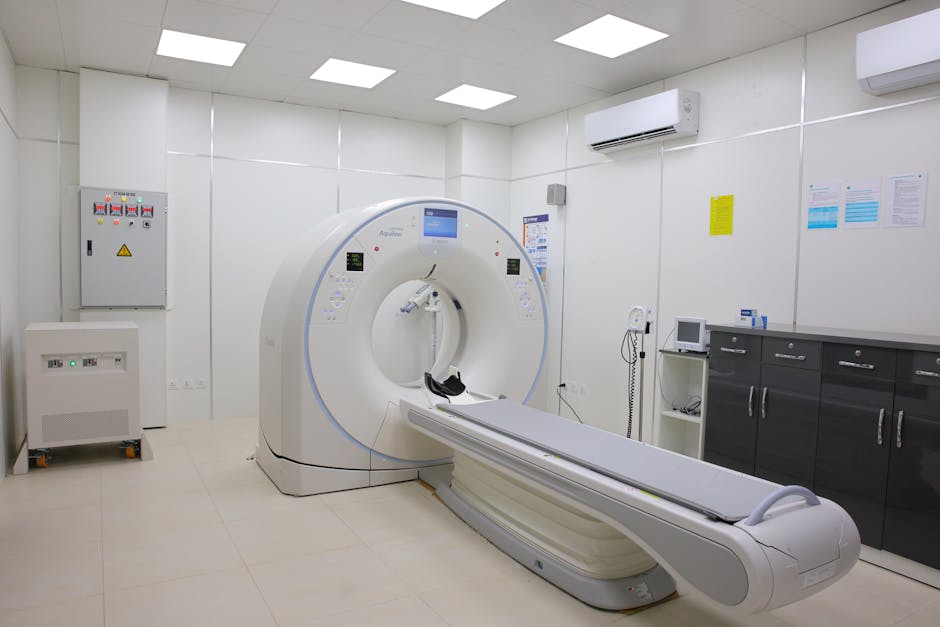
MRI is typically the largest single equipment expense. New closed-bore 1.5T systems run $1.2M-$1.3M; 3T systems push $1.6M-$2.2M. Neither figure includes siting costs – reinforced flooring, specialized ventilation, and emergency quench systems – or the additional coils, workstations, and control room buildout required. Magnet strength selection should reflect your anticipated case mix, since 3T offers superior resolution for neurological and musculoskeletal imaging but adds meaningful cost and siting complexity.
CT Scanners, X-Ray, and Ultrasound
CT scanners range from $90,000-$900,000+ depending on slice count and capabilities, with advanced 128-slice systems at the high end. Installation requires lead shielding, a dedicated power supply, and cooling systems. Slice count and dose reduction features increasingly influence referring physician preferences, making low-dose CT capability a competitive differentiator worth evaluating.
Digital radiography (DR) systems run $45,000-$200,000, with DR now the standard choice over computed radiography (CR) for image quality and workflow efficiency. Ultrasound units span a wide range – from $3,000-$6,000 for portable point-of-care devices to $120,000+ for premium systems with elastography and 4D imaging. PACS and RIS software add additional cost, scaled to your volume and feature requirements, and can range from tens of thousands to hundreds of thousands of dollars depending on the scope of your operation.
New vs. Refurbished: The Trade-Off
Refurbished equipment from reputable vendors can meaningfully reduce acquisition costs while still delivering diagnostic-quality imaging. The right choice depends on your clinical needs, expected volume, and available capital – not a blanket preference for new or used.
Staffing: 40-50% of Operating Expenses
Staffing is where ongoing profitability is won or lost, and where new centers most often underestimate recurring costs.
Radiologist and Medical Director Costs
Radiologists command $300,000-$500,000 annually, varying by subspecialty, experience, and local market. Most new imaging centers avoid employing radiologists directly, instead contracting with radiology groups for professional reads. The medical director role requires its own clearly structured contract covering responsibilities, time commitments, quality metrics, required physical presence, and compensation – regardless of whether the director is employed or contracted.
Technologist Salaries and Credentialing
MRI, CT, ultrasound, mammography, and radiography technologists each earn in the range of $50,000-$90,000+ annually, with MRI technologists and cross-trained technologists often commanding salaries at or above the higher end of that range. All must hold appropriate ARRT or ARDMS certification for their modality, plus state licensure in most states. Credential tracking is an ongoing operational responsibility – using non-credentialed technologists risks accreditation issues, compliance violations, and reimbursement denials.
Financing Your Imaging Center
Few operators write a check for $2M+ on day one. Equipment financing – through loans, equipment leases, or operating leases – allows significant capital equipment costs to be spread over time, often with 100% funding and minimal upfront requirements. Operating leases convert large capital outlays into predictable monthly expenses, which can be advantageous for centers managing tight early-stage cash flow. The right structure depends on your credit profile, revenue projections, and how quickly you expect to reach breakeven volume.
Virtual Contrast Supervision Cuts Startup Costs
One of the less obvious but genuinely high-impact decisions for a new imaging center is how to handle contrast administration supervision. Contrast-enhanced MRI and CT studies are among the most billable procedures in outpatient imaging – but they require qualified radiologist supervision that many new centers struggle to staff affordably.
CMS Virtual Supervision Rules: What’s Still Required On-Site
CMS permits virtual supervision for contrast administration in outpatient settings, meaning a qualified radiologist does not need to be physically present – but must be immediately available via audio/video connection and capable of intervening in real time. The radiologist must be actively engaged, not simply reachable by phone. Documentation of that supervision must be audit-ready for CMS review. The on-site requirement that remains is a trained technologist capable of administering contrast and responding to reactions under radiologist direction.
Start Compliant, Stay Lean
The combination of high startup costs, multi-month licensing timelines, and intense staffing pressure makes the early phase of running an imaging center operationally demanding. Virtual contrast supervision removes one of the most persistent friction points – qualified radiologist coverage for contrast studies – and converts it from a fixed staffing cost into a scalable service. That matters both for the budget and for the speed at which a new center can begin offering a full menu of contrast-enhanced imaging.
Centers that plan for compliance, equipment, and staffing in parallel – rather than sequentially – tend to open faster and reach profitability sooner. Starting with the right infrastructure, the right partners, and a clear-eyed view of true costs is what separates centers that thrive from those that struggle through their first year.
ContrastConnect
Las vegas
Las Vegas
NV
89109
United States


